



 Montenegro
Chapitres
Montenegro is widely regarded as an appealing business destination due to its combination of a favorable tax environment, strategic geographic position, and strong growth prospects across several sectors. Although not a member of the European Union, the country uses the euro as its official currency, which helps minimize exchange rate risk for international investors and streamlines financial transactions.
Its location in Southeast Europe along the Adriatic coast further enhances its attractiveness. Montenegro serves as a gateway to European, Mediterranean, and Balkan markets, making it particularly well-suited for companies engaged in logistics, tourism, trade, and regional services. Key infrastructure assets, including the Port of Bar, reinforce its role as an important maritime hub in the region.
Montenegro’s status as an EU candidate country also adds to its investment appeal. It is among the most advanced in the Western Balkans in terms of accession progress, fostering expectations of regulatory improvements, stronger institutions, and deeper economic integration with the EU. For many investors, this represents an opportunity to establish an early presence ahead of potential economic expansion and regulatory alignment.
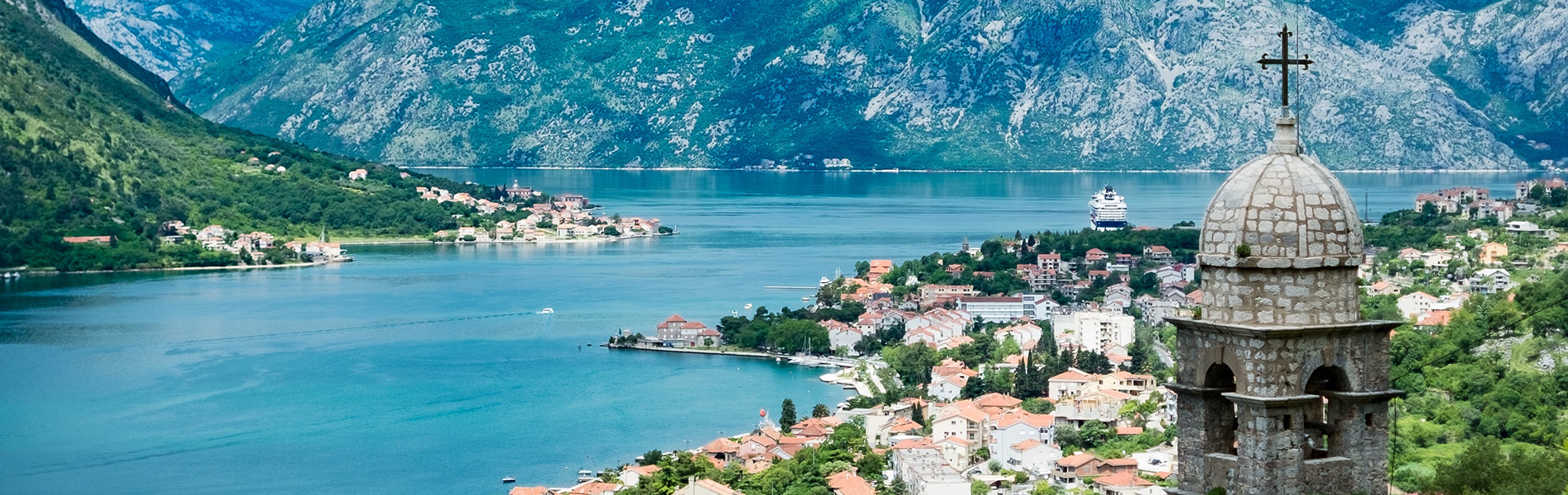
Tourism remains a central pillar of the economy. The country’s coastline, historic towns, and natural scenery draw millions of visitors annually, driving significant investment in hospitality, luxury resorts, marinas, and real estate. High-end coastal developments and marina projects, in particular, have attracted substantial international interest and boosted demand for tourism-related services and property.
In addition, Montenegro offers relatively streamlined procedures for business formation compared to many other European jurisdictions, further enhancing its overall business-friendly environment.

Indicateurs clés
- Surface
- 13,812 km2
- Population
- 625.000 (2025 est.)
- Type de gouvernement
- parliamentary republic
- Langues
- Serbian 42.9%, Montenegrin (official) 37%, Bosnian 5.3%, Albanian 5.3%, Serbo-Croat 2%, other 3.5%, unspecified 4% (2011 est.)
- PIB
- $9.35 billion (2025 est.)
- Taux de croissance
- 3.2% (2025 IMF)
- HDI
- 48
- Capitale
- Podgorica
Indicateurs macroéconomiques
GDP growth is projected to average around 3.2 percent over 2025–27, supported by private consumption, rising real wages, and continued investment. Large-scale infrastructure and renewable energy projects, alongside continued foreign interest in real estate, are expected to support medium-term growth. Highway construction, railway reconstruction, and solar and wind investments should sustain investment, improve connectivity, and accelerate the energy transition. However, the pace and efficiency of implementation will be critical.
At the same time, higher import needs linked to these projects will keep the current account deficit widened, expected to average 18.1 percent of GDP in 2026–27. Poverty is projected to decline to 6.6 percent in 2027, with most poor being chronically unemployed, students, or out of the labor force, mainly in the north. Reducing poverty requires targeted policies alongside sustained economic growth.
EU accession remains Montenegro’s strongest driver of reform but also raises the bar for fiscal discipline under the new EU fiscal framework. With sizeable financing needs, a credible fiscal framework—sustainable, responsive to development needs, effective in managing fiscal risks, and aligned with EU standards—is essential to maintain investor confidence and ensure long-term growth. The fiscal deficit is projected at 3.7 percent of GDP in 2025, narrowing gradually to 3 percent in 2027. Public debt is expected to remain broadly stable in the medium term, averaging about 61 percent of GDP. Ensuring sustainability will require continued fiscal discipline and fiscal risk management, particularly in light of the investment program, lumpy debt repayments and elevated external financing costs. Reforms will also be needed to accelerate growth and reduce debt over time. Risks are two-sided: geopolitical and trade uncertainties could weigh on growth, while EU accession progress could boost prospects.
IMF Statistics:
| Subject descriptor | 2022 | 2023 | 2024 | 2025 | 2026 |
|---|---|---|---|---|---|
|
All Items, Consumer price index (CPI), Period average, percent change Percent (Units) |
13.039 |
8.585 |
3.335 |
3.900 |
3.235 |
|
Current account balance (credit less debit), Percent of GDP Percent (Units) |
-12.887 |
-11.194 |
-17.091 |
-20.549 |
-19.412 |
|
Current account balance (credit less debit), US dollar US dollar (Billions) |
-0.807 |
-0.856 |
-1.414 |
-1.896 |
-1.985 |
|
Exports of goods and services, Volume, Free on board (FOB), Percent change Percent (Units) |
31.541 |
8.331 |
-6.272 |
-4.317 |
3.861 |
|
Gross domestic product (GDP), Constant prices, Percent change Percent (Units) |
7.740 |
6.478 |
3.164 |
2.700 |
2.800 |
|
Gross domestic product (GDP), Current prices, Per capita, US dollar US dollar (Units) |
10046.083 |
12261.695 |
13259.471 |
14784.152 |
16377.088 |
|
Gross domestic product (GDP), Current prices, US dollar US dollar (Billions) |
6.265 |
7.646 |
8.272 |
9.228 |
10.227 |
|
Imports of goods and services, Volume, Cost insurance freight (CIF), Percent change Percent (Units) |
24.117 |
6.685 |
4.529 |
7.733 |
3.691 |
Estimates
Le Luxembourg et le pays
Existing conventions and agreements
Non double taxation agreement signed on January 29, 2024
In order to promote international economic and financial relations in the interest of the Grand Duchy of Luxembourg, the Luxembourg government negotiates bilateral agreements for the avoidance of double taxation and prevent fiscal evasion with respect to Taxes on Income and on fortune with third countries.
Air Services agreement
None
Informations supplémentaires
Foreign Trade
The Statec Foreign Trade statistics provide information on the trade of goods - by product and by country. This information is collected respectively through the INTRASTAT declaration and on the basis of customs documents.
You can see the statistics on the website of the Statec.
Contact points in Montenegro
Embassy of the Grand Duchy of Luxembourg in Montenegro
Ministry of Foreign Affairs
9, rue du Palais de Justice
L-1841 Luxembourg
Tel.: (+352) 247-82486
E-Mail: podgorica.amb@mae.etat.lu
Source: Ministry of Foreign Affairs of Luxembourg
Country risk as defined by Office du Ducroire for Montenegro
Ducroire is the only credit insurer covering open account deals in over 200 countries. A rating on a scale from 1 to 7 shows the intensity of the political risk. Category 1 comprises countries with the lowest political risk and category 7 countries with the highest. Macroeconomics experts also assess the repayment climate for all buyers in a country.
Link: Ducroire Office - Country Risk for Montenegro
Other useful links
- Economic Freedom Index - Montenegro
- Das ist Montenegro
- Montenegrin Investment Agency
- Guide “Why invest in Montenegro”