



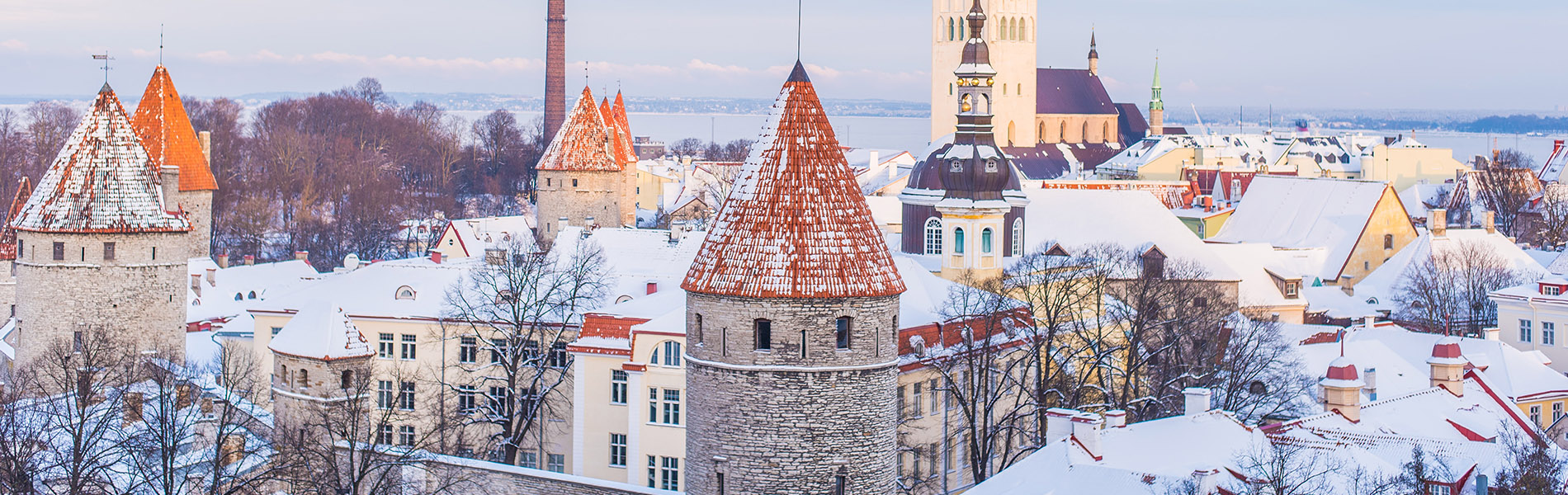
 Estonia
Chapters
Estonia boasts a diversified economy with strengths in digital and technology sectors, especially ICT, and benefits from a growing share of renewable energy. The country has the lowest public debt ratio in the EU and enjoys a business-friendly environment with strong EU and eurozone membership. However, it remains vulnerable to external shocks, particularly from Russia-related disruptions and demographic challenges such as an ageing population. Despite these challenges, Estonia’s economy is expected to return to growth in 2025, driven by private consumption and demand from Nordic and German markets. Investment in infrastructure and renewable energy continues to rise, with advanced digital infrastructure bolstering long-term economic prospects.
Source: Coface

Key indicators
- Area
- 45,228 sq km
- Population
- 1,366,475 (2025)
- Government type
- parliamentary republic
- Languages
- Estonian (official) 67.2%, Russian28.5%, other 3.7%, unspecified 0.6% (2021est.)
- GDP
- $47.03 (billion)
- Growth rate
- 0.6% (2025)
- HDI
- 36
- Capital
- Tallinn
Macroeconomic indicators
The economic recovery will continue despite headwinds from the evolving conflict in the Middle East, with GDP growth reaching 1.8% in 2026 and 2.7% in 2027. Growth will be driven by stronger private investment, consumption and public investment. Inflation will reach 4.1% in 2026 as higher energy prices feed through to consumer prices, while the cancellation of a planned excise duty increase will have only a limited impact in cushioning households. Risks are tilted downward, including regional geopolitical tensions, weaker Nordic demand and persistently high energy prices.
The government deficit will increase to around 4.5% of GDP this year and next. Any positive fiscal surprises should be used to reduce the deficit, with steady consolidation starting next year. A long-term spending and tax strategy is needed to address pressures from ageing, climate and defence. Energy support should be temporary and targeted to vulnerable households. Investment in grids, energy security and storage would support resilience and the green transition.
Source: OECD Economic Outlook
IMF Statistics:
| Subject descriptor | 2022 | 2023 | 2024 | 2025 | 2026 |
|---|---|---|---|---|---|
|
All Items, Consumer price index (CPI), Period average, percent change Percent (Units) |
19.447 |
9.116 |
3.730 |
4.816 |
2.993 |
|
Current account balance (credit less debit), Percent of GDP Percent (Units) |
-2.872 |
-1.517 |
-1.660 |
0.328 |
-2.526 |
|
Current account balance (credit less debit), US dollar US dollar (Billions) |
-1.103 |
-0.626 |
-0.716 |
0.155 |
-1.289 |
|
Exports of goods and services, Volume, Free on board (FOB), Percent change Percent (Units) |
6.577 |
-10.886 |
-1.542 |
4.800 |
2.888 |
|
Gross domestic product (GDP), Constant prices, Percent change Percent (Units) |
0.701 |
-2.932 |
0.105 |
1.282 |
2.097 |
|
Gross domestic product (GDP), Current prices, Per capita, US dollar US dollar (Units) |
28473.558 |
30118.417 |
31446.722 |
34636.010 |
37310.083 |
|
Gross domestic product (GDP), Current prices, US dollar US dollar (Billions) |
38.406 |
41.271 |
43.156 |
47.291 |
51.029 |
|
Imports of goods and services, Volume, Cost insurance freight (CIF), Percent change Percent (Units) |
7.202 |
-9.303 |
0.589 |
4.720 |
4.072 |
|
Unemployment rate |
5.571 |
6.376 |
7.501 |
7.441 |
6.848 |
Estimates
Source: IMF Statistics - Estonia
Relationships with Luxembourg
Existing conventions and agreements
Non double taxation agreement
In order to promote international economic and financial relations in the interest of the Grand Duchy of Luxembourg, the Luxembourg government negotiates bilateral agreements for the avoidance of double taxation and prevent fiscal evasion with respect to Taxes on Income and on fortune with third countries.
- Convention from 23.05.2006 (Memorial 2006, A no.229, p.4075)
- Effective as of 01.01.2008 (Memorial 2006, A no.229, p.4075)
New Convention from 07.07.2014 (Memorial 2015, A no.232, p.5060)
Air Services agreement
None
Further information
Foreign Trade
The Statec Foreign Trade statistics provide information on the trade of goods - by product and by country. This information is collected respectively through the INTRASTAT declaration and on the basis of customs documents.
You can see the statistics on the website of the Statec.
Contact points in Estonia
Embassy of the Grand Duchy of Luxembourg in Warsaw
Ambassador with residence in Warsaw: Ms. Peggy FRANTZEN
UI Sloneczna 15
PL-00-789 Warsaw
Tel.: (+48-22) 507 86 50
Fax: (+48-22) 507 86 61
E-mail: varsovie.amb@mae.etat.lu
Website: varsovie.mae.lu
Honorary Consul
Tallinn
Honorary Consul with jurisdiction over the Republic of Estonia:
Mr Nils Per Anders HEDMAN
Pikk 9
EE-10123 Tallinn
Estonia
Tel.: (+37) 26 44 69 00
E-Mail: consul.lux.tallinn@gmail.com
Source: Ministry of Foreign Affairs of Luxembourg
Country risk as defined by Office du Ducroire for Estonia
Ducroire is the only credit insurer covering open account deals in over 200 countries. A rating on a scale from 1 to 7 shows the intensity of the political risk. Category 1 comprises countries with the lowest political risk and category 7 countries with the highest. Macroeconomics experts also assess the repayment climate for all buyers in a country.
Link: Ducroire Office – Country Risk for Estonia