
Affaires économiques
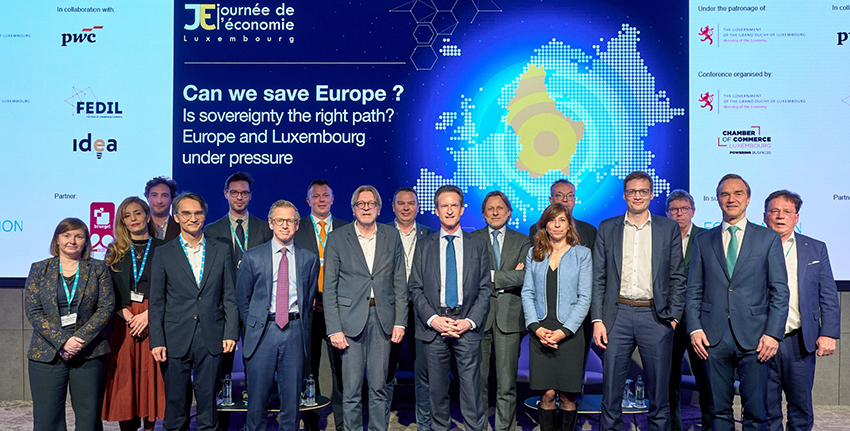
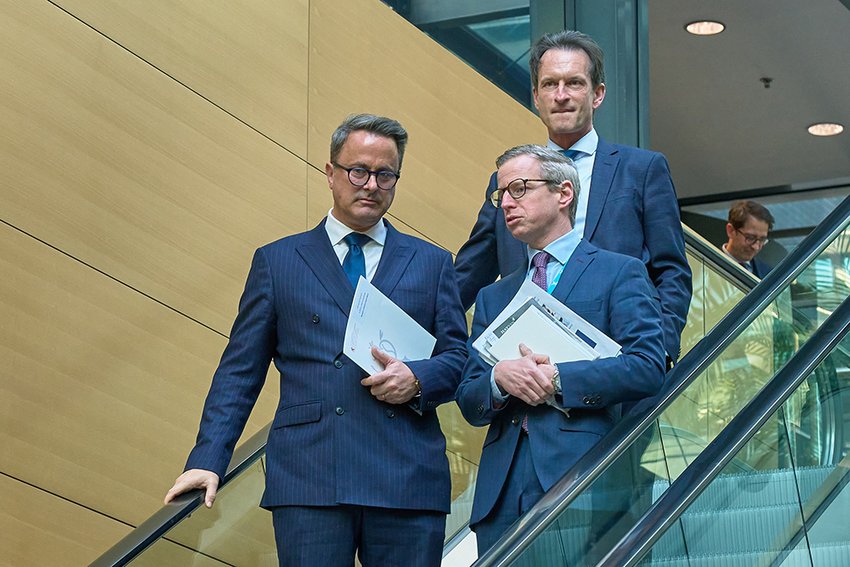
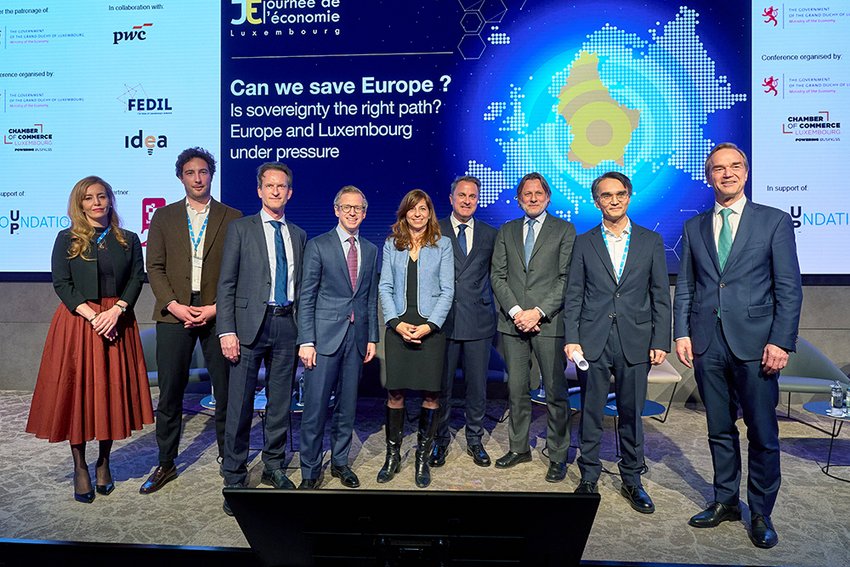
The 19th Journée de l’Economie took place on 18 March 2026 at the Luxembourg Chamber of Commerce. In the presence of Prime Minister Luc Frieden, Xavier Bettel, Deputy Prime Minister, Minister for Foreign Affairs and Trade & for Cooperation and Lex Delles, Minister of the Economy, SME, Energy and Tourism, and with keynote speeches by Guy Verhofstadt, Jeromin Zettelmeyer, an exceptional number of around 280 participants discussed the theme “Can we save Europe? Is sovereignty the right path? Europe and Luxembourg under pressure?”. One fireside chat and one panel discussion enriched the programme and allowed the visitors to raise their questions.
While last year’s edition of the Journée de l’Economie was focused on the impact of AI across various sectors with a particular emphasis on the role of governments, this year’s dominating topics were related to exploring whether Europe is approaching a critical turning point in the face of increasing economic uncertainty, geopolitical tensions, and intensified global competition. These pressures challenge the capacity of the European Union and its Member States to maintain stability, competitiveness, and influence in a rapidly evolving international environment.
A central focus of the discussion was Luxembourg’s strategic position within Europe. Despite its small size, the country plays a significant economic and political role. Another key theme concerned the concept of sovereignty in a highly interconnected world. Participants debated whether greater strategic autonomy and national sovereignty can effectively shield Europe from external shocks—such as economic disruptions, geopolitical conflicts, or supply chain dependencies—or whether long-term stability relies primarily on deeper cooperation and collaboration among European states.
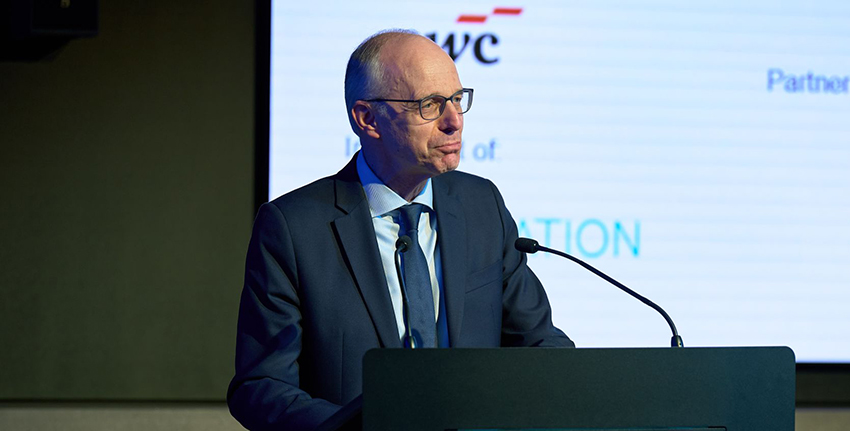
The participants were welcomed by Daniela Cedola, Partner, Government & Public Services, EU Institutions at PwC Luxembourg. Ms Cedola highlighted that this year’s gathering takes place at a particularly pivotal moment, as Europe faces significant geopolitical and economic challenges. Ongoing conflicts, including the war in Ukraine and tensions in the Middle East, alongside rapid technological change and increasing global polarisation, are reshaping the international landscape and impacting both the European and national economies. Ms Cedola emphasised that these developments raise critical questions for all European nations, including how to strengthen resilience, competitiveness, and sovereignty in an evolving global order. She noted that, despite its size, Luxembourg has consistently acted as a strategic player, particularly in finance, innovation, and European integration. She added that the event aims to foster ambitious, forward-looking, and action-oriented discussions to address these shared challenges.
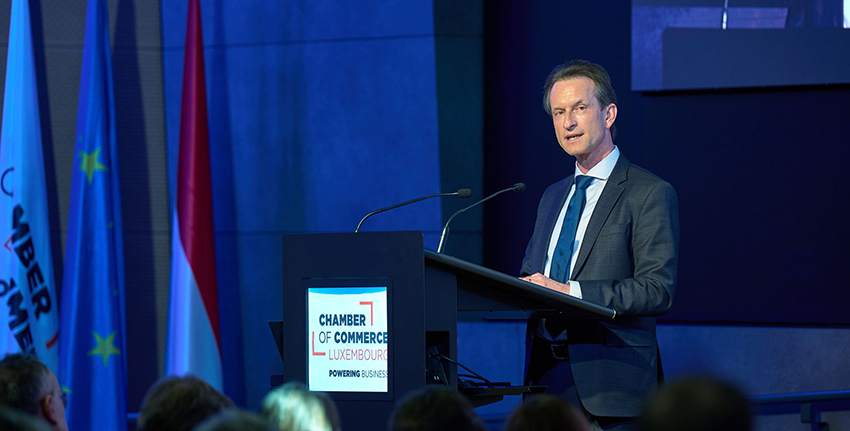
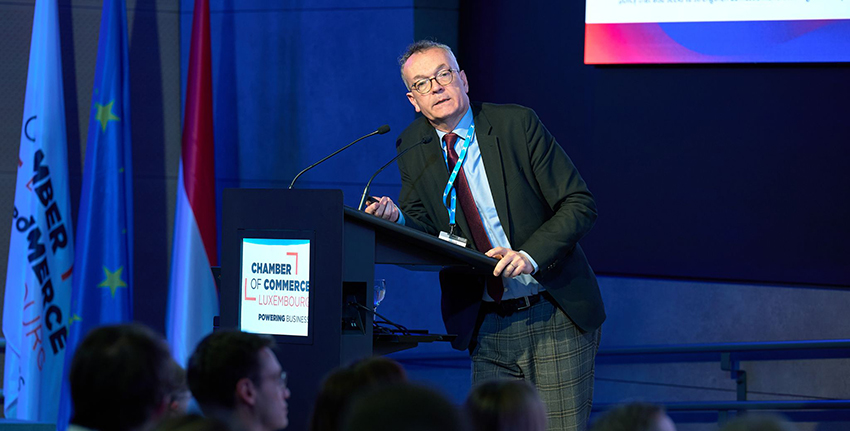
The conference was opened by Carlo Thelen, Director General of the Luxembourg Chamber of Commerce, who underscored the rising geopolitical tensions, including the war in Ukraine and instability in the Middle East, as having concrete economic impacts: “Every external shock, every global slowdown, every loss of competitiveness is felt more quickly and more intensely here than elsewhere.” Mr Thelen stressed that Europe faces a widening investment and productivity gap compared to the United States. and China, underlining the urgency for action. For Luxembourg, competitiveness is not optional—it is “an existential prerequisite” for sustaining growth and attracting talent and investment. He outlined key priorities: closing Europe’s investment gap, simplifying regulations, controlling costs, and securing talent. He concluded with a call to action: “The question is no longer whether we should reform, but whether we collectively have the will and courage to do so (...). Europe and Luxembourg can remain sustainable, attractive, and a source of prosperity for generations to come.”
Europe in a new age of empires
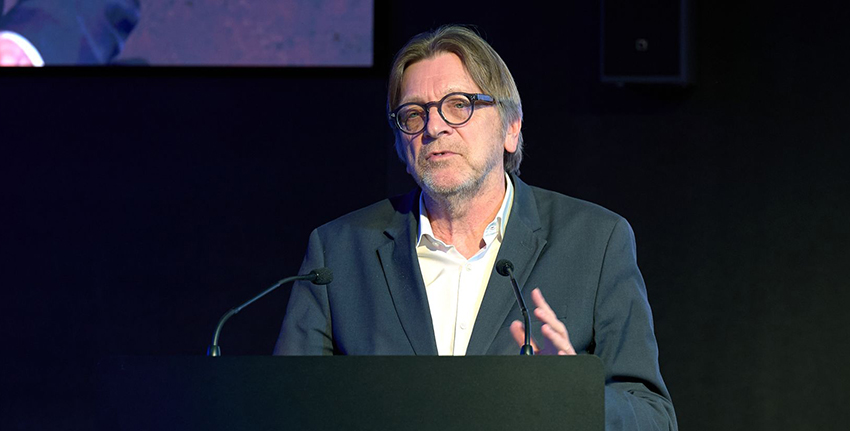
In his keynote speech, Guy Verhofstadt, Former Prime Minister of Belgium, painted a stark picture of today’s global landscape, outlining the challenges of what he called a “new age of empires”, a global order defined by raw power rather than values. He warned that security now outweighs sovereignty: “What counts in this new world order is, in fact, security more than sovereignty.” Describing the global stakes, he said, “We will see a huge confrontation between democracy on the one hand and autocracy,” highlighting tensions from Ukraine to Taiwan. On Europe’s response, he was clear: “As we stand today in Europe… we need to become ourselves an empire.”
He laid out three urgent reforms for Europe to secure its future:
Defence: He called for the creation of a European Defence Community, building on historical proposals, to unify European military capabilities and ensure Europe can act independently while complementing NATO. He noted that Europe currently spends heavily on defence but remains three times less effective than the United States due to duplication and fragmentation of military capabilities and equipment;
Economic and digital competitiveness: He stressed the need for an integrated European digital single market and integrated European capital markets, consolidating telecoms and creating a one-stop stock market to channel European savings into domestic innovation. “Data is the new oil,” he said, warning that Europe risks losing sovereignty over critical digital assets if decisive measures are not taken; and
Institutional reform: He called for streamlining EU decision-making, particularly in foreign affairs, defence, and strategic investments, to overcome the paralysis caused by unanimity requirements. Enhanced cooperation and potentially a new treaty would allow willing member states to advance on key priorities without being blocked by dissenting parties.
Mr Verhofstadt concluded: “In these times of new age of empires, to have a decision-making model based on unanimity and consensus makes no sense,” emphasising that Europe must act decisively to safeguard its sovereignty, economic strength, and democratic values in a rapidly evolving, fragmented, and high-stakes global landscape.
Europe between protectionism and structural change
Jeromin Zettelmeyer, Director of Bruegel tackled the pressing topic of “Europe between protectionism and structural change”, shedding light on how the continent is responding to rising protectionist pressures while undergoing profound structural transformations. Europe can no longer rely on the old rules of global trade. In a thought-provoking keynote, Mr Zettelmeyer warned that the continent faces a dual challenge: a rapidly advancing China and the resurgence of economic nationalism in global powerhouses, including the United States.
Highlighting China’s growing dominance in global manufacturing, he warned that Europe can no longer rely on past strategies. German exports once grew in tandem with Chinese demand, but recent years have seen a structural decoupling, with Chinese exports now closely mirroring European products. The result, he argued, is that Europe must pursue three objectives simultaneously: slow the “Chinese steamroller” without undermining domestic adaptation, support structural transformation of EU industry, and preserve trade based on rules and global competitiveness.
To achieve this, he advocated a nuanced mix of temporary trade defences, targeted foreign investment to maintain competition, labour mobility, and regional-level industrial policy. Using examples from Switzerland and the Netherlands, he emphasised that Europe must guide structural transformation thoughtfully, avoiding distortions while strengthening areas of production and skills. His message was clear: Europe cannot return to the industrial dominance of a decade ago, but it can secure a resilient, competitive future through strategic adaptation rather than protectionism alone.
Among the distinguished speakers, we also had the privilege of listening to Prime Minister Luc Frieden, who underlined that economic strength is the foundation of sovereignty. “Without prosperity, there is no stability. Without strong economies, there's no capacity to invest, to innovate or to protect our societies.” Highlighting the global impact of recent events, Mr Frieden noted, “The conflict in Iran…is geographically distant from us, and yet its consequences reached our economies almost immediately. Energy markets reacted within hours.” The message was clear: Europe’s prosperity is deeply interconnected with global stability. The address stressed that European sovereignty cannot mean isolation. “Europe will only be sovereign if it accepts that none of its countries can be sovereign alone,” Mr Frieden said, advocating coordinated action in areas from energy security to technological innovation. Luxembourg’s strategic partnership with Mistral AI was cited as an example: “This partnership…is about ensuring that the European public sector participates in building the next generation of AI capabilities on our continent.” The keynote concluded with a call for cooperation, efficiency, and shared ambition: “We Europeans are capable of shaping our future. And that is why the real question for me is not whether Europe can be saved. The real question is whether we are ready to act together with the confidence that Europe has always drawn from its greatest strengths.”
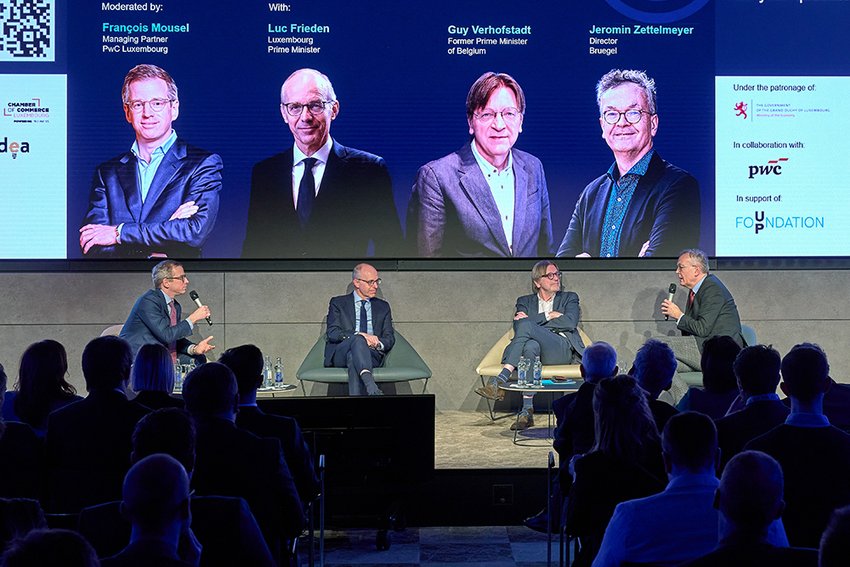
A Fireside Chat followed before the break, featuring the three keynote speakers in a moderated discussion led by François Mousel, Managing Partner of PwC Luxembourg.
Mr Mousel opened the discussion by revisiting Mr Verhofstadt’s keynote speech regarding the three priorities—defence, the single market (including industrial policy), and institutional reform—setting the stage for a deeper exchange on Europe’s readiness in a changing global order. Mr Verhofstadt stressed that Europe once had ambitions for a unified defence structure in the 1950s, but this effort failed and became a “forgotten chapter” of European integration, resulting in a less cohesive and less effective defence system today, despite significant combined military spending. He added that a key tension emerged between political leadership and public opinion. While around 60–65% of European citizens reportedly support stronger common defence, there is “no willingness” among many national leaders to advance such a project. He ultimately underscored a central paradox: broad public backing exists for deeper defence cooperation, yet political hesitation continues to prevent it from becoming a concrete and decisive European initiative.
Mr Mousel continued the discussion by questioning the gap between strong public support for European defence and the lack of political momentum at national level. Responding, Mr Frieden pointed to history, geography, and decision-making processes as key obstacles. Threat perceptions differ across Europe, and historical national experiences shape both defence policies and willingness to deploy forces. He stressed that many countries remain reluctant to delegate decisions on “sending troops somewhere” to a European authority. Mr Zettelmeyer highlighted structural divisions, particularly between France and Germany, whose differing traditions and interests complicate integration. He suggested that progress could come from cooperation on procurement, capabilities, and creating a true single market for defence—without centralising decisions on troop deployment. Mr Verhofstadt argued that more dramatic external pressure may be needed to accelerate integration, warning that fragmented national projects cannot replace a true European Defence Union.
Despite these challenges, Mr Frieden struck a more optimistic tone, noting increasing defence spending, stronger European procurement, and the need for specialisation among countries. The discussion concluded that while full integration remains complex, gradual cooperation is advancing—and necessary.
Mr Mousel steered the discussion to the second keynote priority—the economy and the single market—underlining the link between prosperity, industrial policy, and Europe’s competitiveness. Mr Frieden emphasised broad consensus on deepening the single market, calling it Europe’s greatest strength with “450 million consumers.” He stressed the need for stronger enforcement of existing rules, further integration in areas like capital markets, and closer engagement with businesses—particularly SMEs. However, he acknowledged that progress is often slowed by political sensitivities and national interests. Mr Zettelmeyer argued that the biggest gains—such as in services, capital markets, and energy—are also the hardest to achieve due to entrenched national interests and domestic political costs. He noted that meaningful reforms typically only happen under strong, time-bound pressure, which is currently lacking. Mr Verhofstadt called for stronger leadership from the European Commission, urging it to move beyond “roadmaps” and instead put forward concrete legislative proposals, as was done during the creation of the single market. While challenges remain, Mr Frieden concluded on a pragmatic note: progress is possible, but in democracies it takes time - especially in the absence of crisis-driven urgency.
Securing tomorrow: Luxembourg’s role in defence & tech innovation
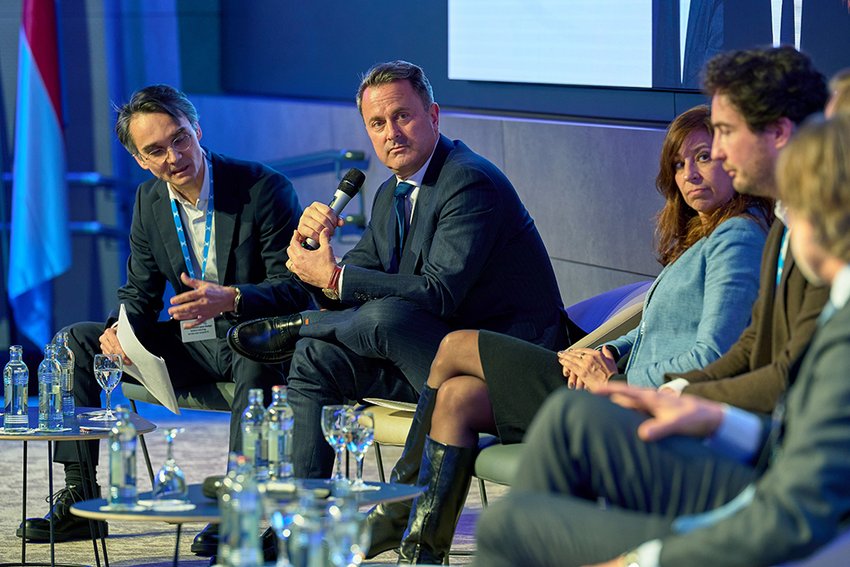
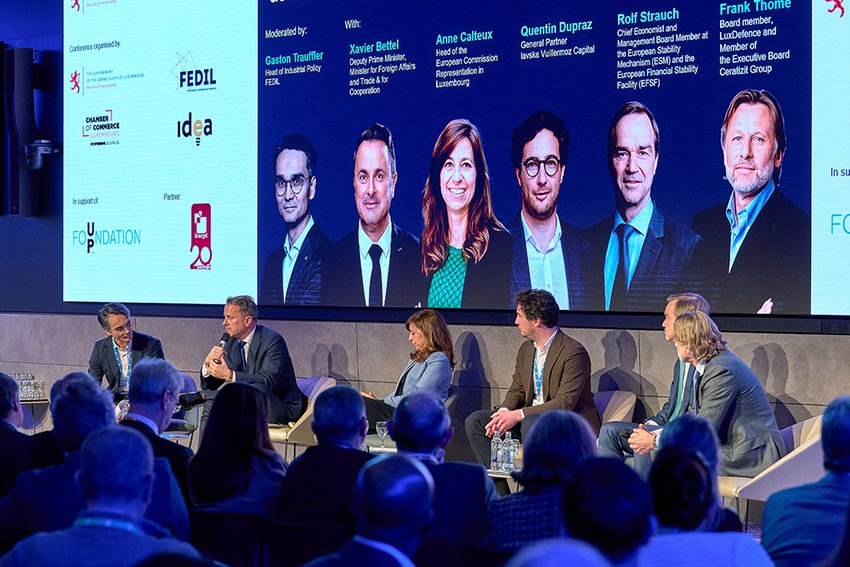
After the break, the event featured an engaging panel discussion titled “Securing tomorrow: Luxembourg’s role in defence & tech innovation”, moderated by Gaston Trauffler, Head of Industrial Policy, FEDIL. Bringing together leading voices from government, industry, and finance, the panel featured well-known and influential figures, including Xavier Bettel, Deputy Prime Minister, Minister for Foreign Affairs and Trade & for Cooperation and Anne Calteux, Head of the European Commission Representation in Luxembourg; Quentin Dupraz, General Partner at lavska Vuillermoz Capital; Rolf Strauch, Chief Economist and Management Board Member at the European Stability Mechanism (ESM) and the European Financial Stability Facility (EFSF) and Frank Thomé, Board Member, LuxDefence and Member of the Executive Board, Ceratizit Group.
The high-level panel discussion illustrated how Luxembourg is stepping into a new era of defence and security, positioning itself as a strategic hub for European innovation, exploring how Luxembourg can contribute to the evolving European defence landscape, while fostering economic growth and technological leadership.
Mr Bettel, highlighted Luxembourg’s commitment to increasing its defence capacity while ensuring that investments create local jobs and strengthen the national industry. “Luxembourg may be small,” he said, “but we want to invest here, create high-value jobs, and contribute meaningfully to Europe’s security architecture.”
Panelists emphasised the importance of efficiency, collaboration, and speed in European defence programmes. Mr Thomé noted that Luxembourg already plays a crucial role through its specialised logistics, secure infrastructure, and unique industrial capabilities, such as tungsten production and satellite technologies.
From an investment perspective, Mr Dupraz stressed the need for visibility, demand certainty, and public-private collaboration to attract startups and scale innovative technologies. The panel highlighted Luxembourg’s potential to lead in areas such as AI, defence data, and space-related defence applications—leveraging the country’s strong digital ecosystem and favourable regulatory framework.
Ms Calteux reinforced the role of EU-level support, from joint procurement initiatives to the European Defence Fund and new digital company frameworks like the EU Inc.. These initiatives aim to streamline investment, boost innovation, and strengthen Europe’s defence industrial base.
The discussion also addressed balancing social priorities with increased defence spending. Mr Strauch underscored that efficiency, creativity, and long-term growth strategies could ensure that European countries meet security needs without compromising social cohesion.
The panel concluded with a shared vision: Luxembourg, though small, can carve out a specialised, strategic, and high-impact role in European defence—combining industrial expertise, financial leadership, and innovation-driven growth to support both national and European security.
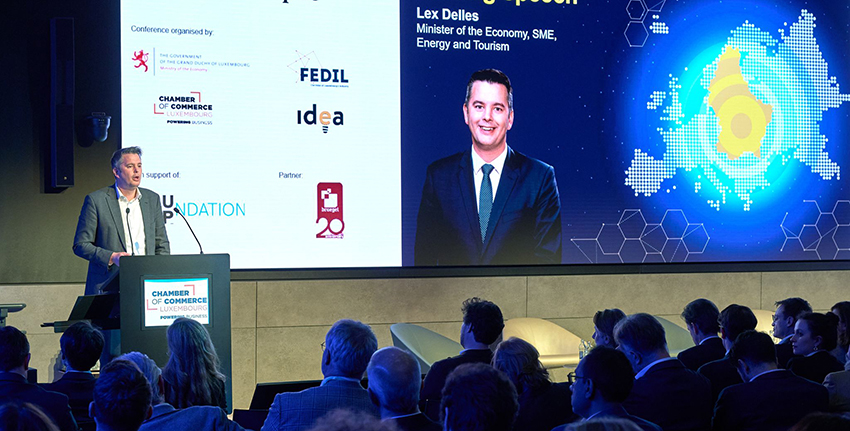
The day concluded with an inspiring closing speech by Lex Delles, Minister of the Economy, SME, Energy, and Tourism, sharing his insights on the critical importance of European resilience in today’s rapidly changing geopolitical landscape. He stressed that Luxembourg must work closely with its European neighbours, fostering collaboration across borders to strengthen the continent’s economic and industrial foundations. Highlighting the need for a barrier-free European market, Mr Delles argued that seamless integration is essential to enable innovation, growth, and competitiveness. He also underscored the role of strong European leadership in coordinating joint efforts and driving strategic initiatives forward. On the defence sector, Mr Delles noted that it is a rapidly growing industry with significant potential. He encouraged leveraging Luxembourg’s expertise and resources to actively participate in this expanding market, aligning industrial capacities, capital, and policy to contribute effectively to Europe’s security and technological advancement. In summary, Mr Delles painted a vision of a united, resilient, and strategically coordinated Europe, where collaboration, leadership, and forward-looking investment are key to sustaining prosperity and security.
On behalf of all the organisers, we extend our heartfelt thanks to all participants and panellists for their invaluable contributions to the conference.
Communicated by PwC